Eight Northeast Oklahoma Tribal Nations Sign Landmark Intertribal Wildlife Management and Reciprocity Compact
Relevant links can be found at the bottom of this page.
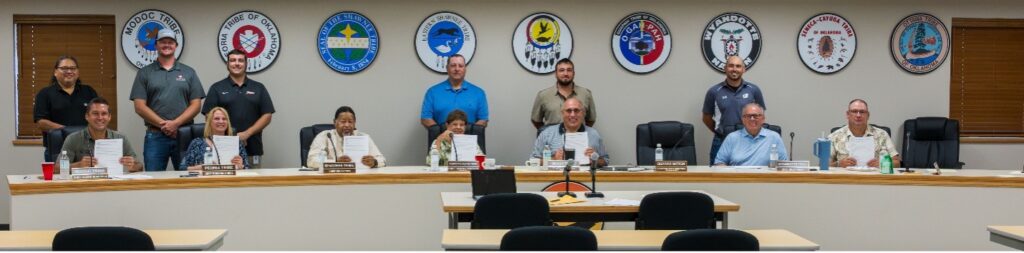
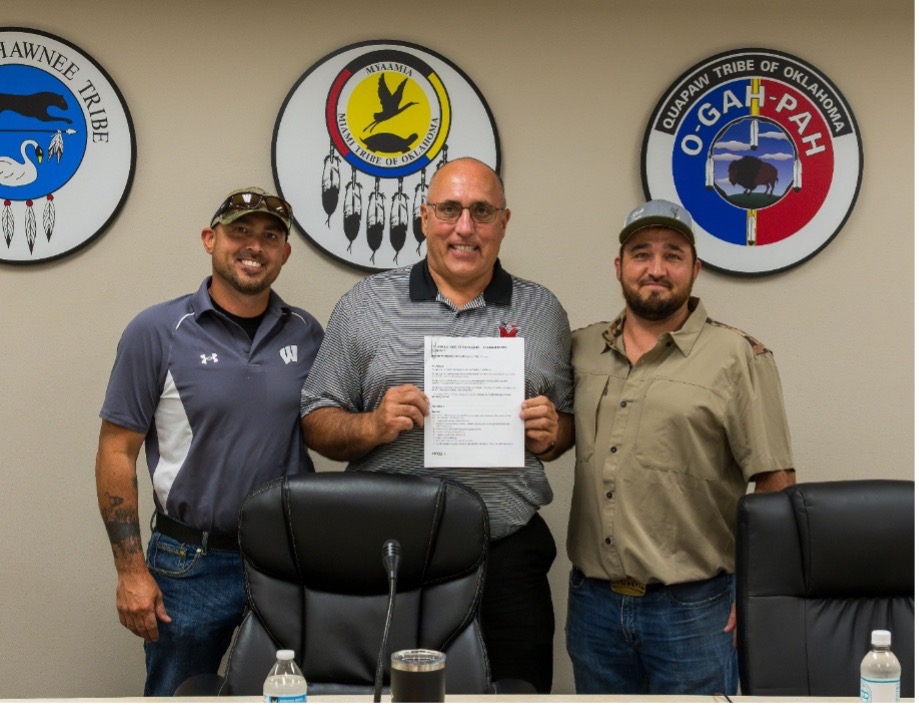
MIAMI, Okla. (Aug. 4, 2026) — Leaders from eight Northeast Oklahoma Tribal Nations, including the Miami Tribe of Oklahoma, signed the landmark Intertribal Wildlife Management and Reciprocity Compact on Tuesday, Aug. 4, establishing a unified framework for wildlife conservation, hunting, fishing, gathering, and trapping while preserving the sovereign authority of each participating Tribe.
The participating Tribal Nations are the Wyandotte Nation, Miami Tribe of Oklahoma, Eastern Shawnee Tribe of Oklahoma, Ottawa Tribe of Oklahoma, Peoria Tribe of Indians of Oklahoma, Modoc Nation, Seneca-Cayuga Nation, and Shawnee Tribe.
The signing marks a significant milestone in intertribal cooperation and reflects a shared commitment to protecting wildlife resources through Tribal leadership. Drawing inspiration from the longstanding collaboration among the Five Civilized Tribes, the Compact establishes a comprehensive framework for wildlife conservation among participating Tribal Nations while respecting each Nation's inherent sovereignty.
Before the U.S. Supreme Court's McGirt decision, Native Americans in Oklahoma generally had to purchase an Oklahoma hunting and fishing license to hunt or fish in the state. After the decision, tribes were able to exercise their authority to manage hunting and fishing within their own reservation boundaries.
These eight tribal nations have chosen to work together by adopting the same hunting and fishing Wildlife Codes. These codes are nearly identical to Oklahoma's regulations, including the same hunting seasons, bag limits, and other wildlife conservation requirements. These codes only apply to the participating tribal jurisdictions.
Instead of purchasing a state hunting and fishing license, enrolled members of participating tribes can now receive a tribal hunting and fishing license from their own tribe. Each participating tribe agrees to recognize the licenses and tribal identification cards issued by the other participating tribes. Eligible Myaamia citizens may hunt and fish by carrying only a valid Tribal identification card, at no expense; however, they must register on the Intertribal Wildlife Consortium E-Check System to become eligible before hunting or fishing. Most of the other participating Tribal Nations recognize their Tribal membership cards as the required hunting and fishing credential as well; each Nation will also determine its own licensing and identification requirements.
All participating tribes have also agreed to count harvested game toward the same seasonal bag limits. This means a hunter cannot exceed the allowed limit by hunting in different jurisdictions. The bag limit follows the hunter, no matter where they hunt within the participating tribal reservations or the State. Again, it is important to restate that before hunting or fishing, all tribal citizen participants must register with the Intertribal Wildlife Consortium E-Check System, coming soon.
The Intertribal Wildlife Consortium E-Check System (www.itwc.net) serves as the central resource for the Compact, providing the complete Intertribal Wildlife Code, harvest reporting, and other information for participating hunters and fishermen. While the website includes the full Code, each participating Tribal Nation maintains and publishes its own Chapter 4 reservation-specific regulations, which govern hunting, fishing, trapping, and other wildlife activities within that Tribe's jurisdiction. The complete Intertribal Wildlife Code, including the Miami Tribe of Oklahoma's Chapter 4 reservation-specific regulations, is available on the Miami Tribe of Oklahoma's website at https://miamination.com/intertribal-wildlife-consortium/.
Among its key provisions, the Compact:
- Establishes reciprocal recognition of hunting, fishing, trapping, outdoor recreation, and related permits issued by participating Tribal Nations, subject to federal law and reservation-specific regulations.
-
Creates the Intertribal Wildlife Council, with each tribe appointing a representative to coordinate biological management, conservation initiatives, annual season recommendations, and future wildlife policy development.
- Implements the Intertribal Wildlife Consortium E-Check System (www.itwc.net), providing a unified harvest reporting system for big game species for licensed participants.
- Promotes consistent wildlife conservation regulations while allowing each Tribe to adopt reservation-specific rules tailored to local wildlife populations and management needs.
- Strengthens cooperation among commissioned law enforcement officers of participating Tribal Nations and other individuals authorized to enforce Tribal wildlife, natural resources, or criminal laws.
- Preserves the sovereignty of every participating Tribe by ensuring that no provision of the Compact supersedes Tribal law or diminishes each Nation’s inherent authority to govern its own lands and natural resources.
"This agreement demonstrates what Tribal sovereignty looks like in action," said Akima Douglas Lankford. "By standing together, we are reclaiming responsibility for managing our wildlife resources, strengthening conservation across our lands, and protecting the rights of our citizens to hunt, fish, and harvest in a way that supports both our traditions and our future. This is about self-governance, stewardship, and ensuring food security for generations to come."
The Intertribal Wildlife Management and Reciprocity Compact represents a historic step toward strengthening Tribal sovereignty, enhancing wildlife conservation, and fostering greater cooperation among Tribal Nations committed to protecting natural resources for future generations.
Photos by Doug Peconge, Miami Tribe of Oklahoma.